Toimituskulut on laskettu vastaanottajan postinumeron perusteella:00180 - Helsinki Vaihda postinumero
Syötä postinumero toimitusta varten: Tallenna
EUR
428,46
ilman ALV 341,40
Kokonaishinta sis. toimitus
428,46
Tämä toiminto vaatii sisäänkirjautumisen. Luo käyttäjä ja voit käyttää listojamme esim. säännöllisiä ostoksia ja toivelistoja varten Luo käyttäjä Kirjaudu
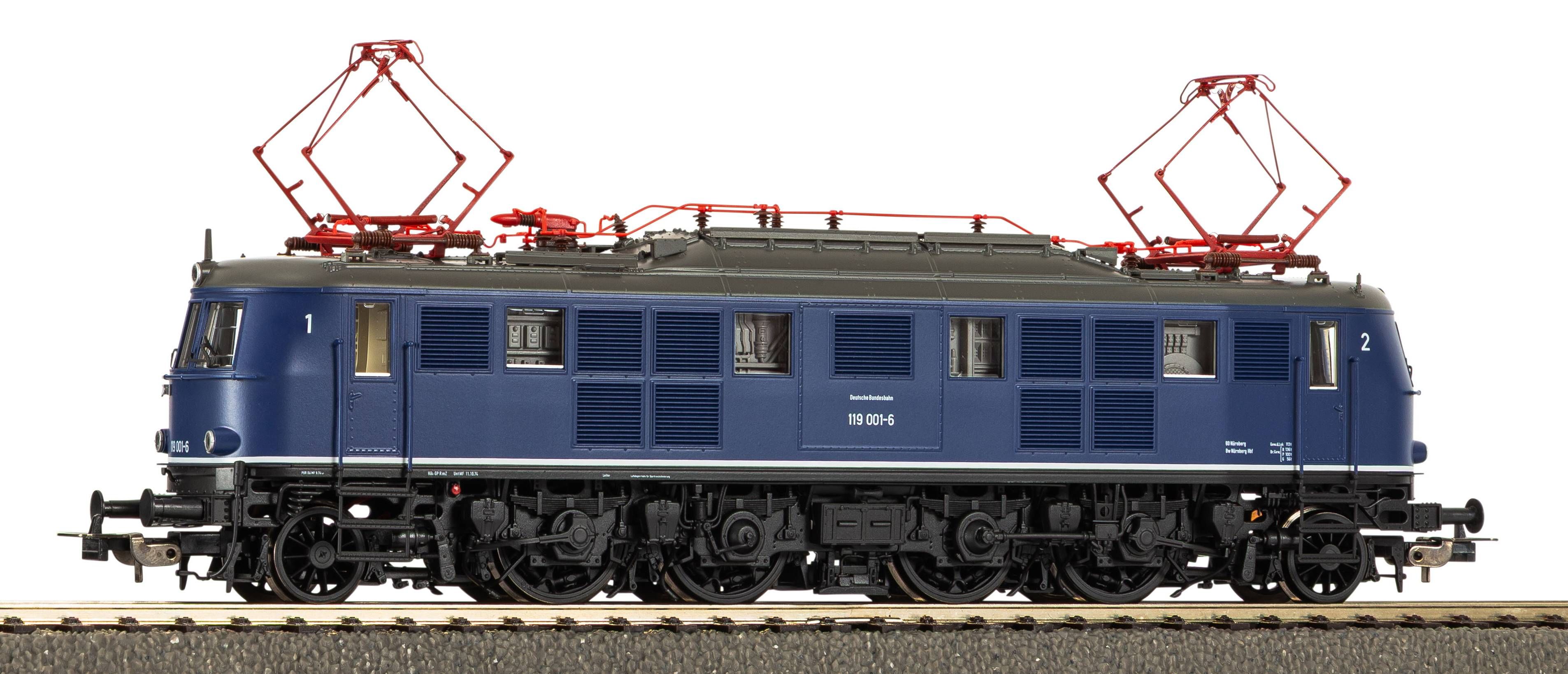
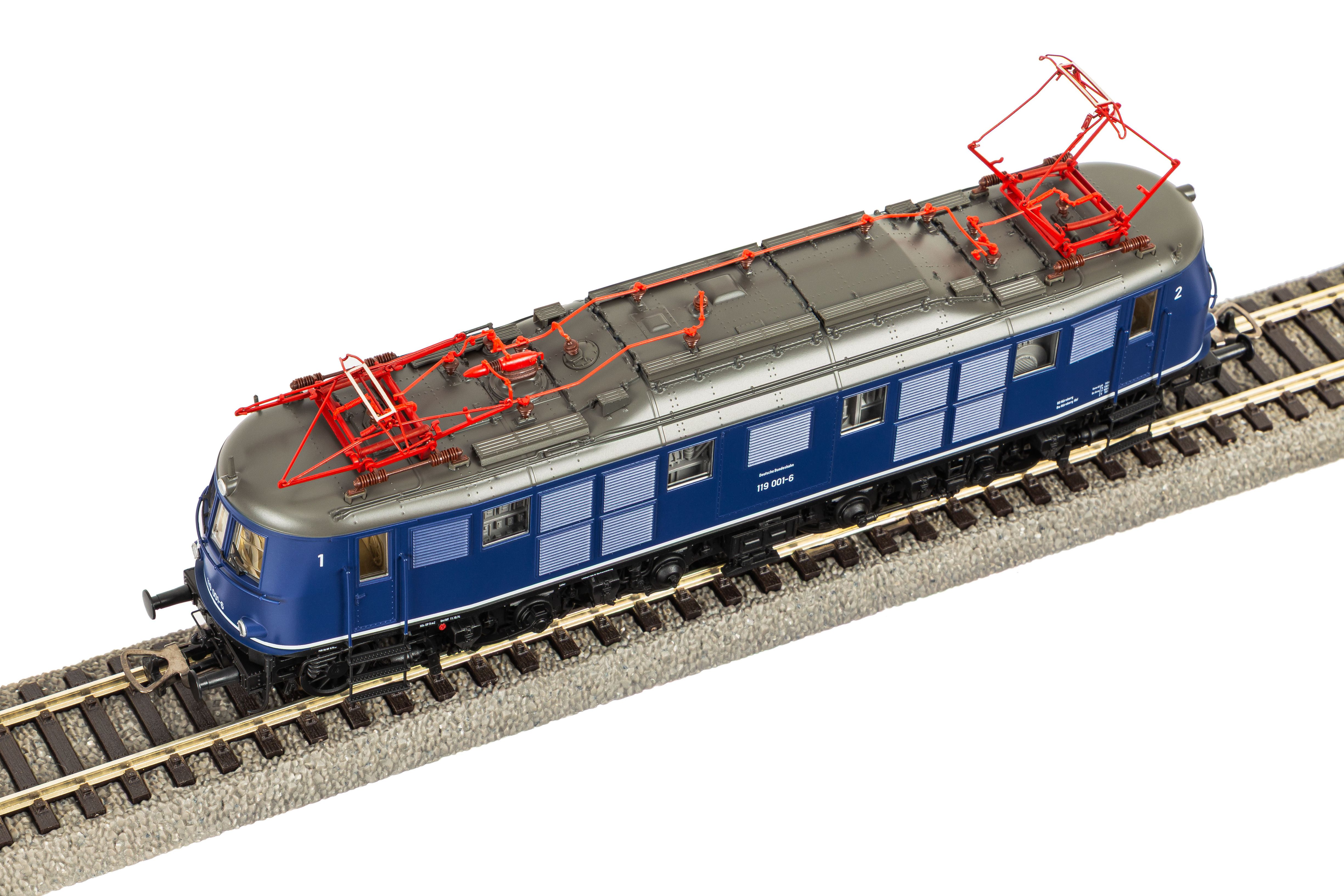
Novelty 2026: Elegance and Power at High Speed – the E 19 Class For the revolution of rail transport by the Deutsche Reichsbahn at the end of the 1930s, the E 19 class was developed as one of the fastest and most elegant electric locomotives of its time. Designed for operation on the fully electrified Berlin – Halle (Saale) – Munich route, a top speed of 180 km/h was planned, with reserves for over 200 km/h. On the steep ramps of the Franconian Forest, it was still expected to reach 60 km/h. In 1937, two prototypes (E 19 01 and 02) were built by AEG, followed in 1939 by two more from Siemens-Schuckert and Henschel. Both types were based on the proven E 18, adopting its successful spring-mounted motor drive and the rigid frame with wheel arrangement 1’Do1’. The visible differences were mainly the modified fan and window arrangement.
Innovative design elements were also introduced: the body panels were welded instead of riveted, and a modified fine regulator ensured smoother switching. Its motor output increased by around 500 kW, complemented by improved suspension, reinforced brakes, and an electric dynamic brake, which enhanced safety at 180 km/h. After World War II, the Deutsche Bundesbahn took over all four locomotives. Stationed at Bw Nürnberg, they hauled express trains through the Franconian Forest and from Nuremberg to Regensburg. From 1968, they were based at Bw Hagen-Eckesy and were subsequently reclassified as Class 119. With the retirement of the last locomotive, E 19 002, in 1978, active service ended. Today, E 19 01 is preserved as an impressive testimony to German electric locomotive history.
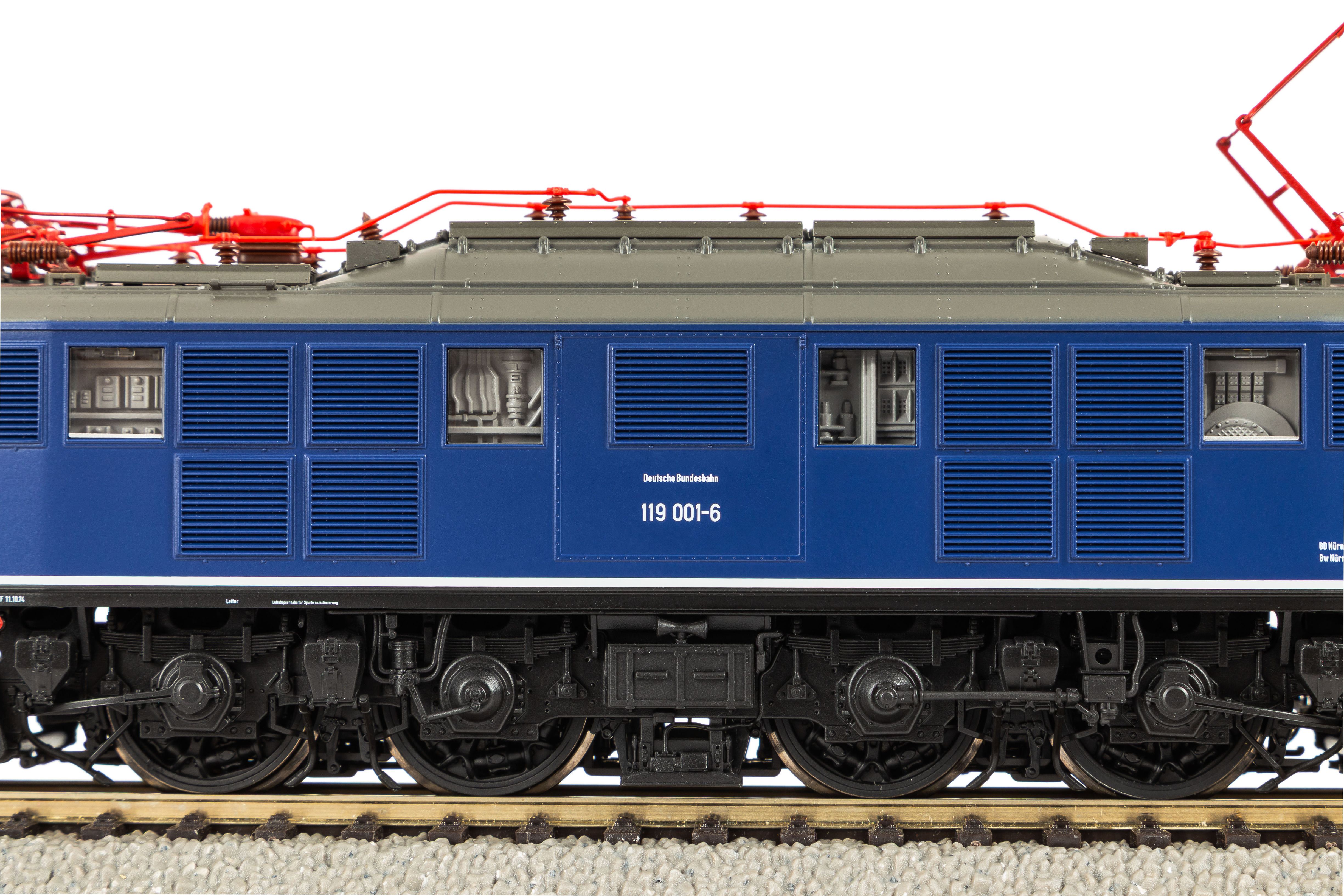
Version with typical stem lamps of Era IV and delicate SBS 39/54 pantographs | With fine handrails, UIC sockets, and additional centrifugal regulator | Extra sandboxes, axle bearing covers, and battery boxes | Separately attached windshield wipers, roof lines, and insulators | In digital operation with switchable cab and control panel lighting
Tuotetyyppi
Veturin pienoismalli
Rakenne
Esikoottu
Mittakaava
HO (1:87)
Alkuperäinen mallinimi
BR 119
Ehdotettu sukupuoli
Ei sukupuolirajoitusta
Suositeltu ikä (min)
14 vuosi/vuosia
Tuotteen väri
Sininen
Maaversio
Saksa
Valaistus
Kyllä
Pituus
195 mm
Löydämme tuotteen järjestelmästämme helposti seuraavalla tuotenumerolla
EAN:
4015615210603
SKU:
PIK-21060
Miksi samalla tuotteella on monta eri tuotesivua tai tuotenumeroa?
Valmistajat usein julkaisevat saman tuotteen monella eri tuotenumerolla. Usein eroa on vain pakkauksessa. Eri tuotepakkaus saattaa olla suunniteltu eri valtioille.
Yritämme parhaamme mukaan laittaa samat tuotteet saman tuotenumeron alle, mutta joskus sama tuote on eri tuotenumeroilla sivullamme.